
Meeting AI Is Becoming the Manager Coaching Layer
Introduction
For the last two years, most meeting AI products have sold the same promise: better notes, faster summaries, and fewer missed action items. That value is real, but it is no longer enough. A stronger use case is emerging: helping managers coach better by pulling recurring signals out of one-on-ones, team meetings, and execution reviews.
The shift matters because managers do not usually fail from lack of data. They fail from fragmented context. One person raises a blocker in a weekly sync. Another hints at role confusion in a one-on-one. A project review shows the same delay pattern for the third time. Individually, each moment is easy to overlook. Together, they point to a coaching issue.
From meeting recap to management signal
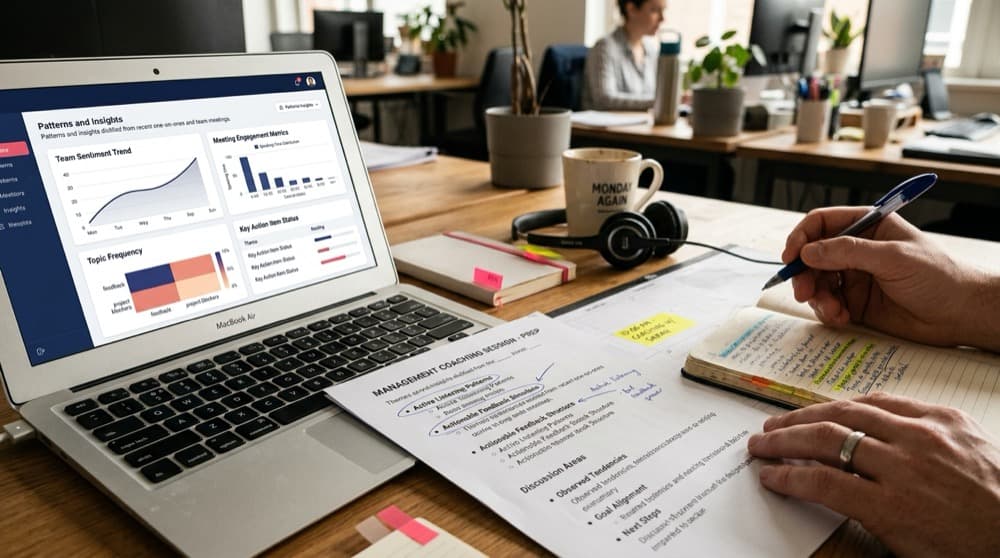
The next wave of meeting AI is not just about capturing what happened in one call. It is about connecting what keeps happening across many conversations.
That creates a much more useful output for managers:
- repeated blockers that surface across different team members
- themes in feedback that suggest unclear expectations
- commitments that keep slipping despite apparent agreement
- coaching topics that should be addressed before performance problems grow
This is where meeting memory becomes operational. Instead of asking a manager to manually remember six weeks of context, the system can surface patterns worth attention.
Why this trend is rising now
Three forces are pushing this shift forward.
First, managers are carrying more communication load across hybrid teams. Important context is spread across one-on-ones, standups, customer calls, and project reviews. Second, leadership teams now expect AI to do more than summarize; they want it to reveal useful patterns. Third, companies are realizing that missed coaching moments are expensive. A small pattern ignored for a month often becomes a performance, retention, or execution problem.
That makes the market more practical. Buyers are asking a sharper question: can this tool help managers intervene earlier, not just document the past?
What strong products will do differently
The winners in this category will not position themselves as automated management gurus. That would be both risky and easy to distrust. The better approach is simpler: give managers structured visibility.
A strong product should help managers:
- review recurring themes across meetings without rereading everything
- trace whether a concern is isolated or persistent
- prepare for coaching conversations with evidence, not vague intuition
- follow whether agreed changes actually show up in later meetings
For Upmeet.ai, this is a natural extension of the product truth. If the platform already captures transcripts, summaries, action items, and searchable meeting memory, the next layer is pattern detection that helps leaders act with more clarity.
The business impact
This matters because better coaching compounds. Managers who spot patterns early can correct execution faster, support employees more consistently, and reduce the drag created by repeated misunderstandings.
It also strengthens trust in meeting AI. Notes are helpful, but they are easy to commoditize. A tool that helps a manager walk into a difficult conversation better prepared delivers a more defensible outcome.
Conclusion
Meeting AI is moving from passive record-keeping to practical managerial support. The opportunity is not to replace judgment. It is to give managers better context before judgment is required.
CTA
If Upmeet.ai wants to win this next wave, the message should be clear: we do not just capture meetings—we help managers see the patterns that shape team performance and follow-through.